
EFC Congress 2026
City of Bucharest
Known for its wide, tree-lined boulevards, glorious Belle Époque buildings and a reputation for the high life (which in the early 1900s earned its nickname of “Little Paris”), Bucharest, Romania’s largest city and capital, is today a bustling metropolis.
Legend has it that the city of Bucharest was founded by a shepherd named Bucur, whose name literarily means “joy.” His flute playing reportedly dazzled the people and his hearty wine from nearby vineyards endeared him to the local traders, who gave his name to the place.
Bucharest Sights and Landmarks
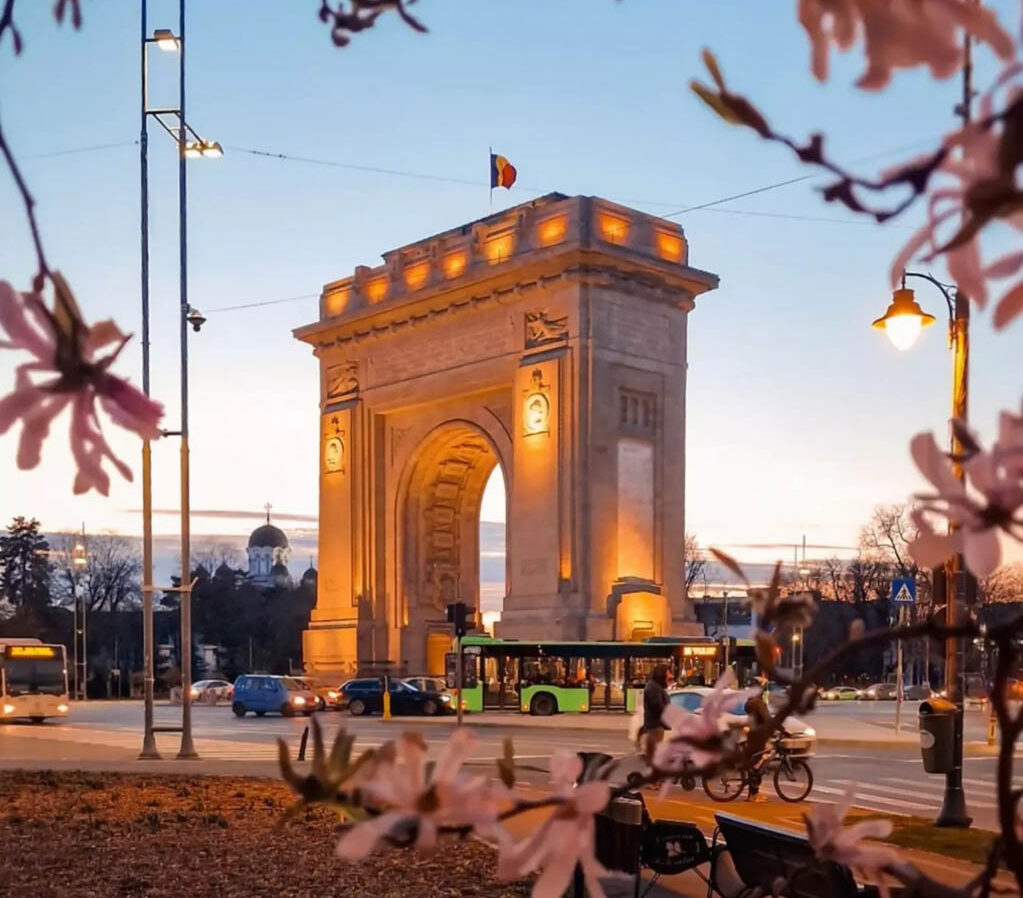
Arch of Triumph
Built in 1922 to honor the Romanian soldiers who fought WWI, Bucharest’s Arch of Triumph also symbolizes Romania’s latin heritage and its strong ties with France.
The monument was redecorated in 1936 with base-reliefs carved in marble brought from Rușchița – Transylvania.
The sculptures were created by leading Romanian artists – including Ion Jalea, Constantin Medrea and Constantin Baraschi – and ten Italian sculptors.
Every weekend, June through October, visitors can climb to the top of the 90 feet-high structure, via an interior staircase, for a panoramic view of the city.
Cantacuzino Palace
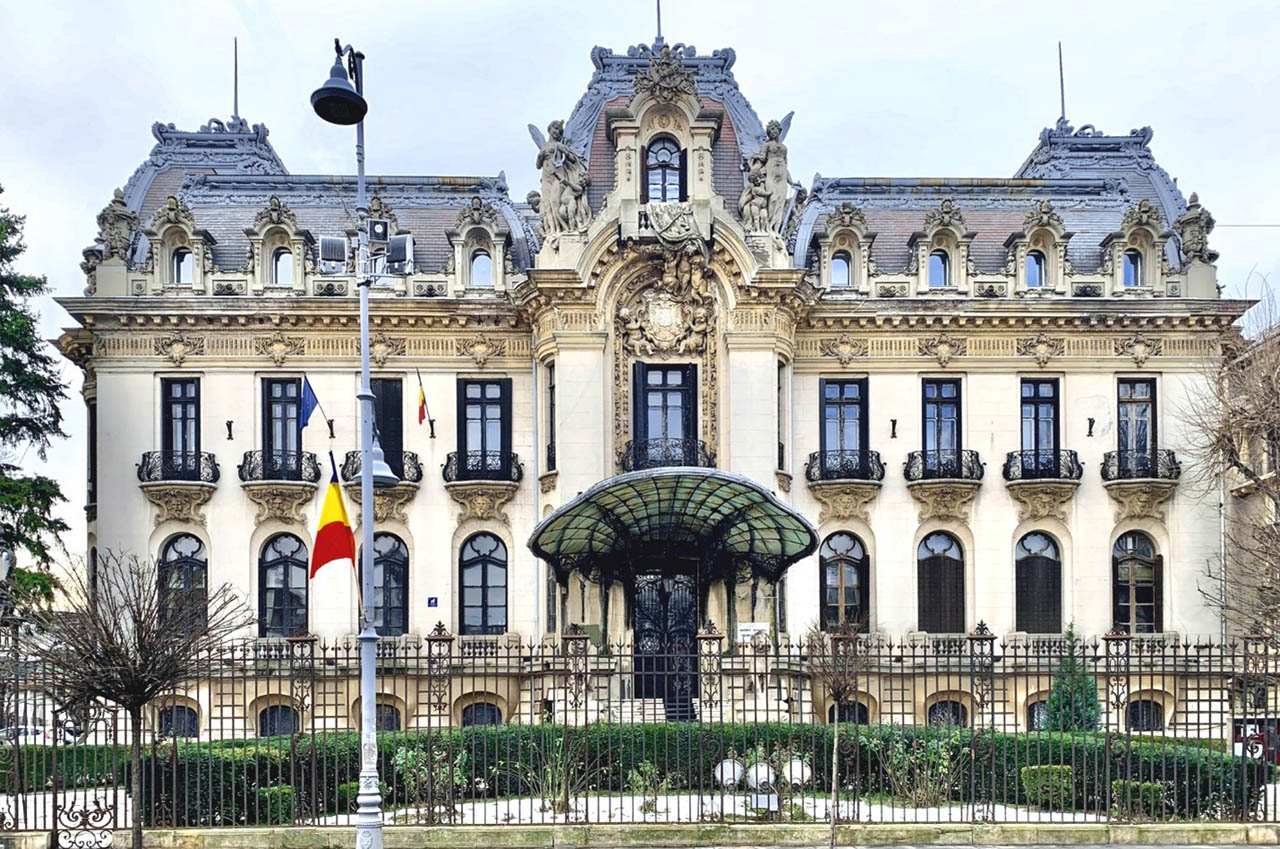
The former residence of Grigore Cantacuzino (nicknamed Nababul – the Nabab) is one of the most beautiful structures that line Calea Victoriei. A member of Cantacuzino princely family, former mayor of Bucharest, minister and Prime Minister, Grigore Cantacuzino was considered, in late 1800s, to be one of the wealthiest Romanians.
His desire to have the most elegant residence in all Bucharest became a reality in 1902. This beautiful Beaux Arts palace, designed by architect Ion Berindey, features superb wrought iron balconies, tall arched windows and a porte-cochere flanked by two lions.
Today, the palace houses the George Enescu Museum, dedicated to one of Romania’s greatest musicians.
Revolution Square
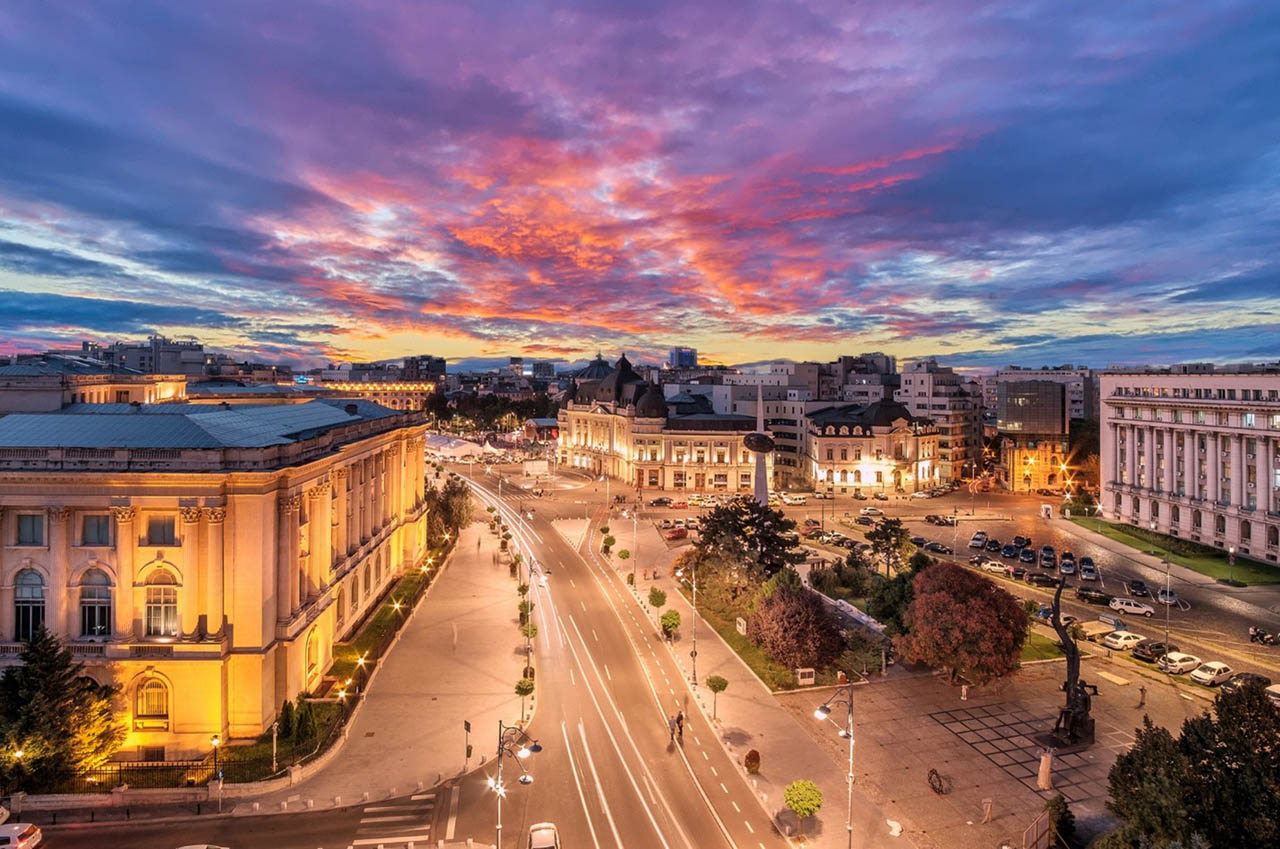
One of Bucharest’s areas most often associated with the 1989 unrest that lead to the demise of Romania’s Communist Regime is Piata Revolutiei. Revolution Square gained international notoriety when TV stations around the globe broadcasted Romania’s Communist leader Nicolae Ceausescu’s final moments in power, on December 21, 1989. From the balcony of the former Communist Party Headquarters, Nicolae Ceausescu stared in disbelief as the people gathered in the square, as his request, turned on him. He fled the angry crowd in his helicopter and his 34-years in power ended.
Revolution square’s importance stretches back long before the dramatic events of the 1989 Revolution. On the west side of the square stands the former Royal Palace, now home to the National Art Museum and the small, but beautiful, Kretzulescu Church. On the opposite side of the Royal Palace stands the stunning Romanian Athenaeum, an 1,000-seat music venue known for its excellent acoustics and huge frescoes that depict important moments in Romania’s history.
Bucharest Royal Palace
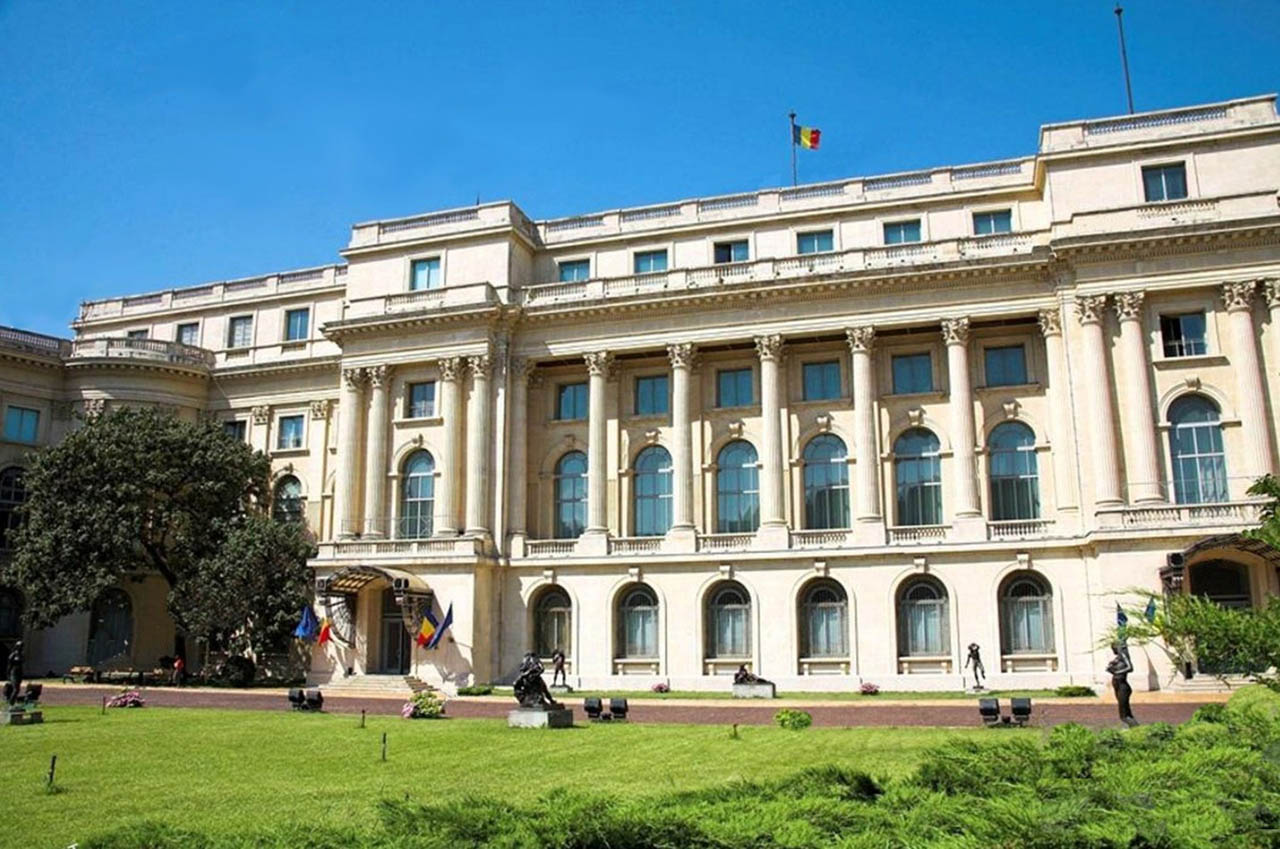
Completed in 1937, in neoclassical style, Bucharest Royal Palace was home to King Carol II and to his son, King Mihai I, until 1947, when the monarchy was abolished in Romania.
It was inside this palace that King Mihai, then aged 18, led a coup that displaced the pro-Nazi government during the World War II and put Romania on the Allies’ side.
Today, the former Royal palace houses Romania’s National Art Museum.
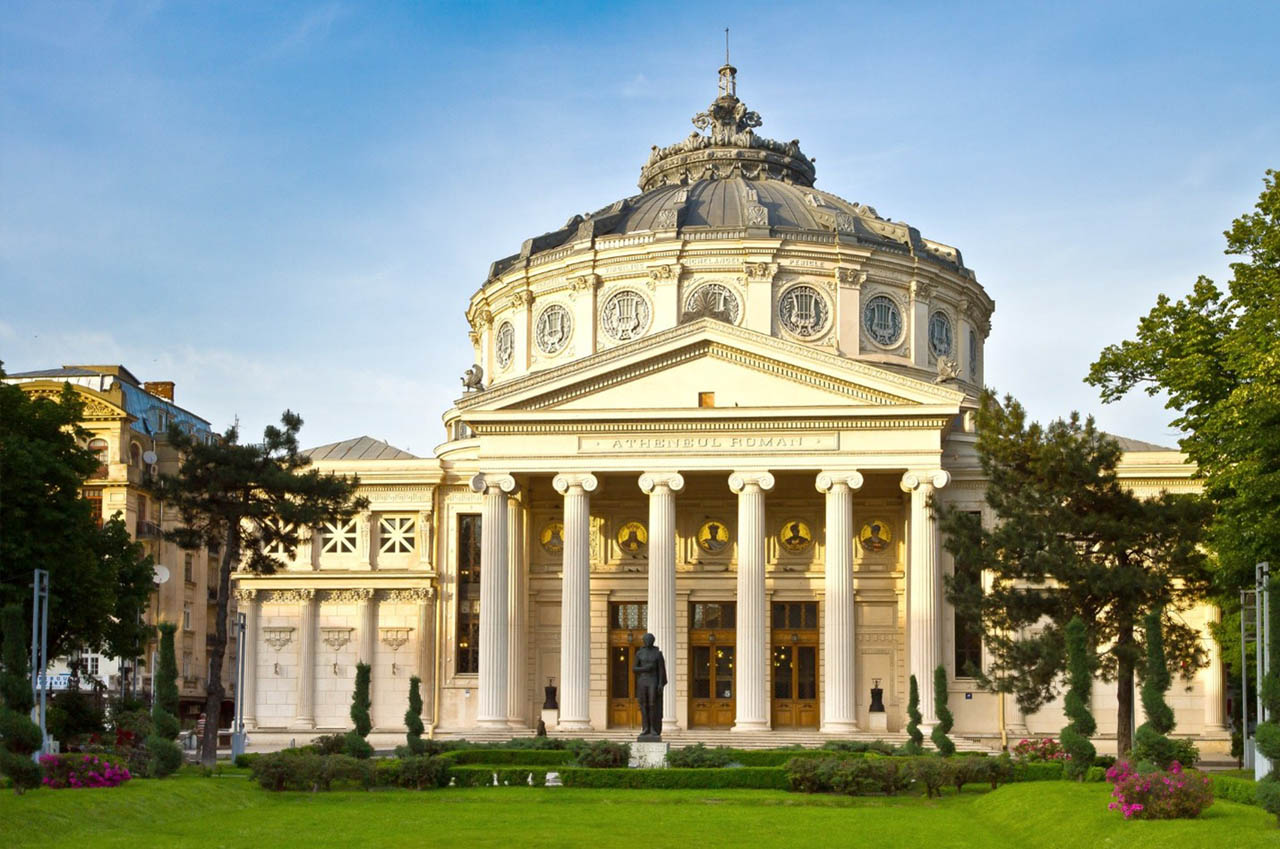
The Romanian Athenaeum
The Romanian Athenauem – an European Heritage building – was designed by French architect Albert Galleron, who also designed the National Bank of Romania. The construction of the Athenaeum was initiated on February 25, 1873 by the Romanian Athenaeum Society (founded in 1865 by naturalist Constantin Esarcu, physician Nicolae Kretzulescu and historian V. A. Urechia); it was largely financed with money donated by the general public, thanks to a successful fundraising campaign “Dati un leu pentru Ateneu” (Donate a coin for the Athenaeum).
The Athenaeum was completed in 1888. Its high dome and Doric columns resemble an ancient temple. The lobby has a beautifully painted ceiling decorated in gold leaf, while curved balconies cascade in ringlets off a spiral staircase. A ring of pink marble columns is linked by flowing arches where elaborate brass lanterns hang like gems from a necklace. A spectacular fresco, by Painter Costin Petrescu, adorns the concert hall; it depicts 25 historical events concerning Romania’s national identity and pride.
Renowned worldwide for its outstanding acoustics, Romania’s most prestigious concert hall – and home of the Romanian Philharmonic Orchestra – is open to visitors.
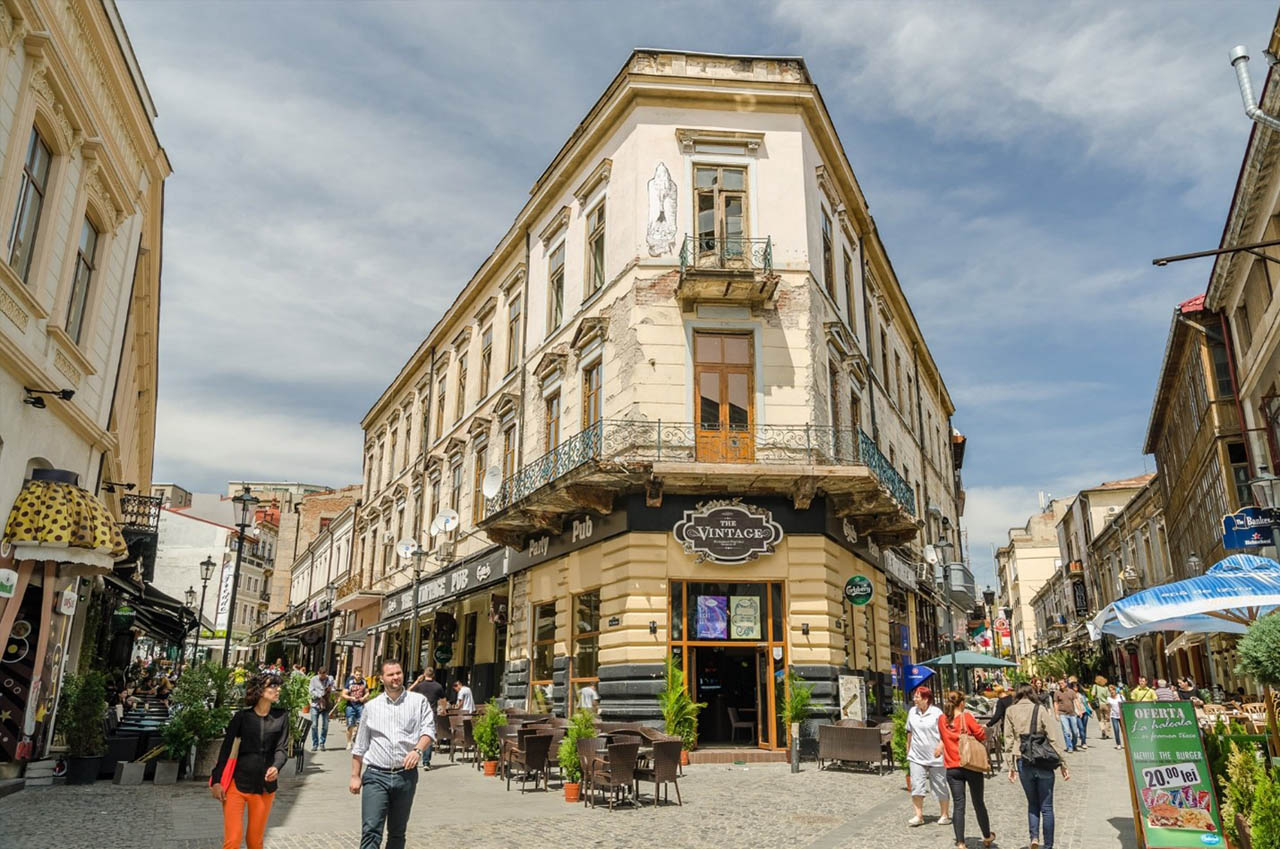
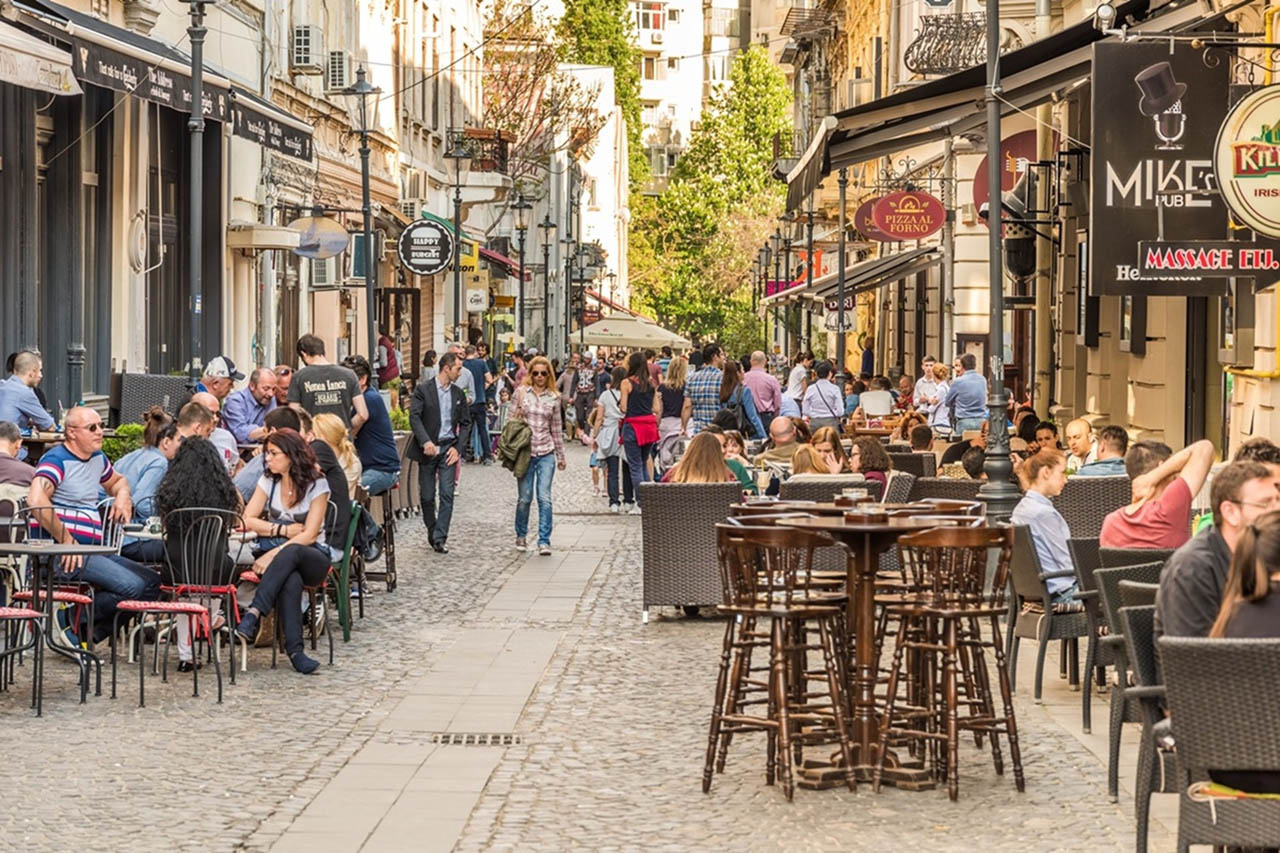
Old Town Bucharest / Lipscani street Area
At the beginning of 1400s, most merchants and craftsmen – Romanian, Austrian, Greek, Armenian and Jewish – established their stores and shops in this section of the city; a jumble of streets between Calea Victoriei, Blvd. Bratianu, Blvd. Regina Elisabeta and the Dambovita River.
Soon, the area became known as Lipscani, named for the many German traders from Lipsca or Leiptzig.
Other streets took on the names of various old craft communities and guilds, such as Blanari (furriers), Covaci (blacksmiths), Gabroveni (knife makers) and Cavafii Vechii (shoe-makers). The mix of nationalities and cultures is reflected in the mishmash of architectural styles, from baroque to neoclassical to art nouveau.
Today, the area is home to art galleries, antique shops, coffeehouses, restaurants and night-clubs.
While walking in the narrow cobblestone streets one can imagine the long-gone shopkeepers outside near their stores, inviting bypassers to buy their merchandise.
National Bank of Romania
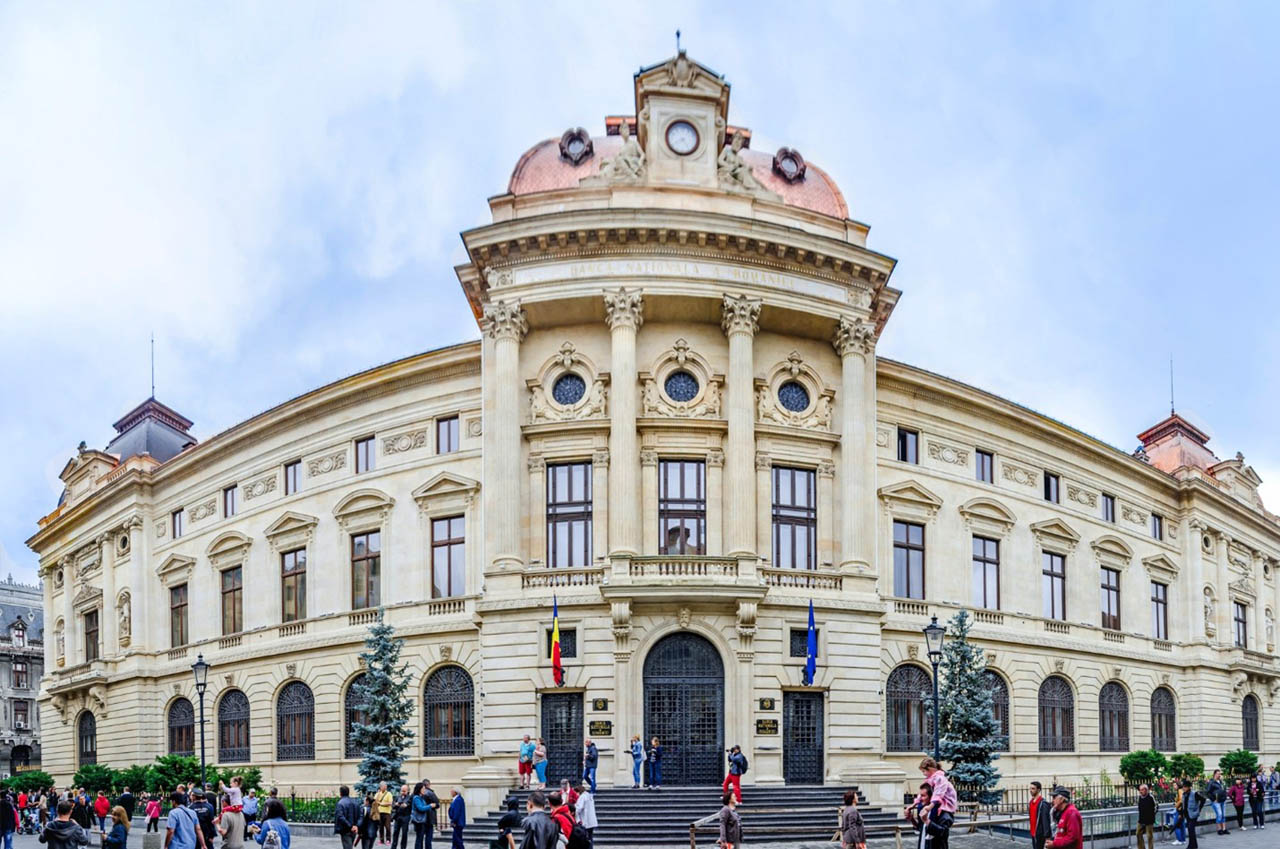
The National Bank of Romania (BNR) stands on the site of, well-known at its time, inn (Hanul Serban Voda), open in 1678.
Two fires gutted the building and in 1883 the land was leveled and work to build a home for Romania’s National Bank begun. The new structure, designed by French architects Cassien Bernard and Albert Galleron, was completed in 1885. The neoclassical French-style structure boasts a facade with Corinthian columns and an enormous central hall.
University Circle
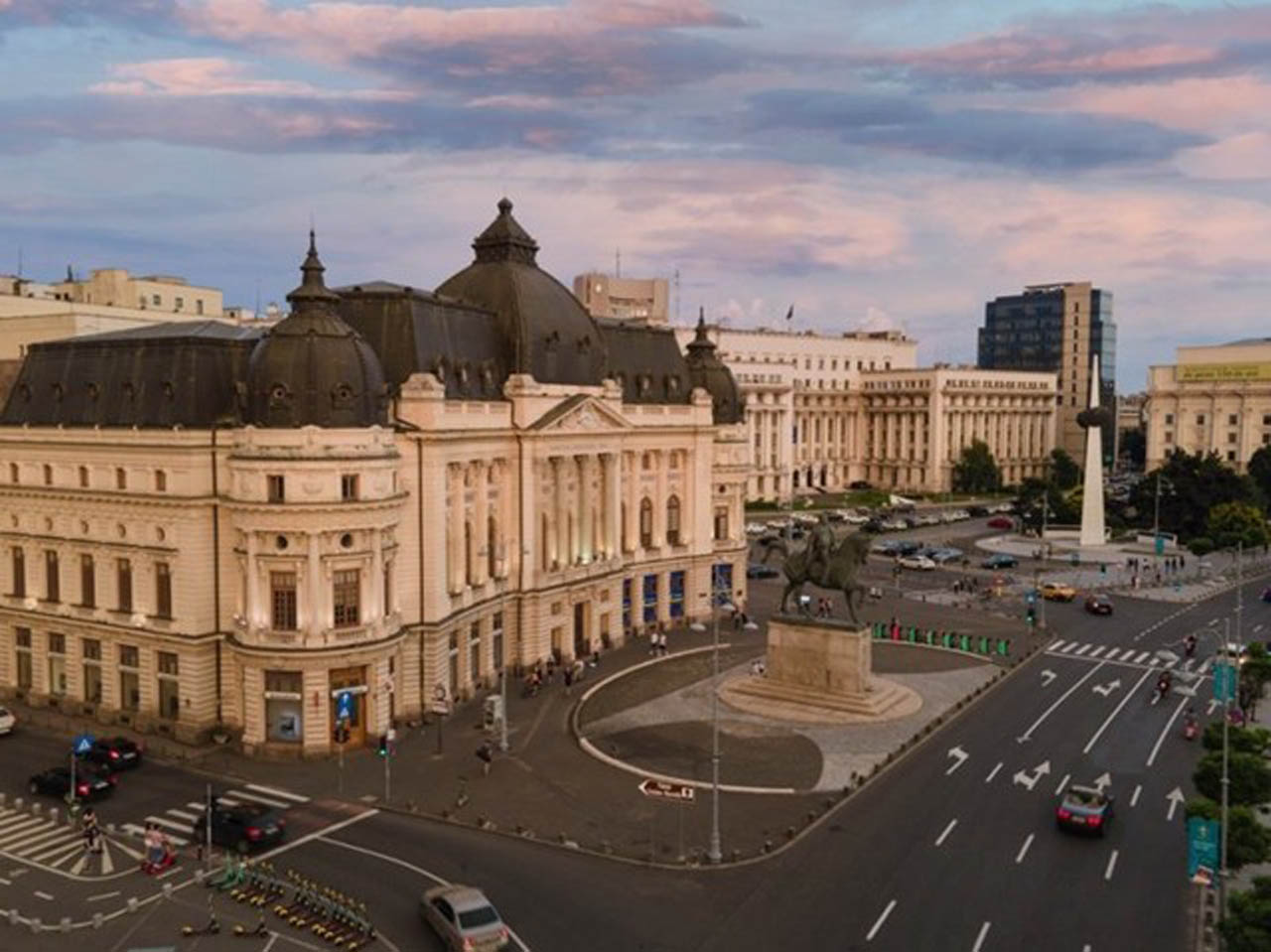
Buzzing with crowds and traffic from early morning until late at night, this area is one of the most popular meeting places in Bucharest. The square features remarkable architecture: Bucharest School of Architecture, the National Theatre, the neoclassical Coltea Hospital and its lovely church (1702 – 1794) and Sutu Palace, now home to the Bucharest History & Art Museum.
In the middle of the circle, on a little ‘island’, 10 stone crosses pay respect to those killed during the 1989 revolution. Below the circle there is an underground passage, with small shops, that offer pedestrians access to the one side of the circle and to University Circle (Piata Universitatii) subway station.
Romania’s Parliament Palace
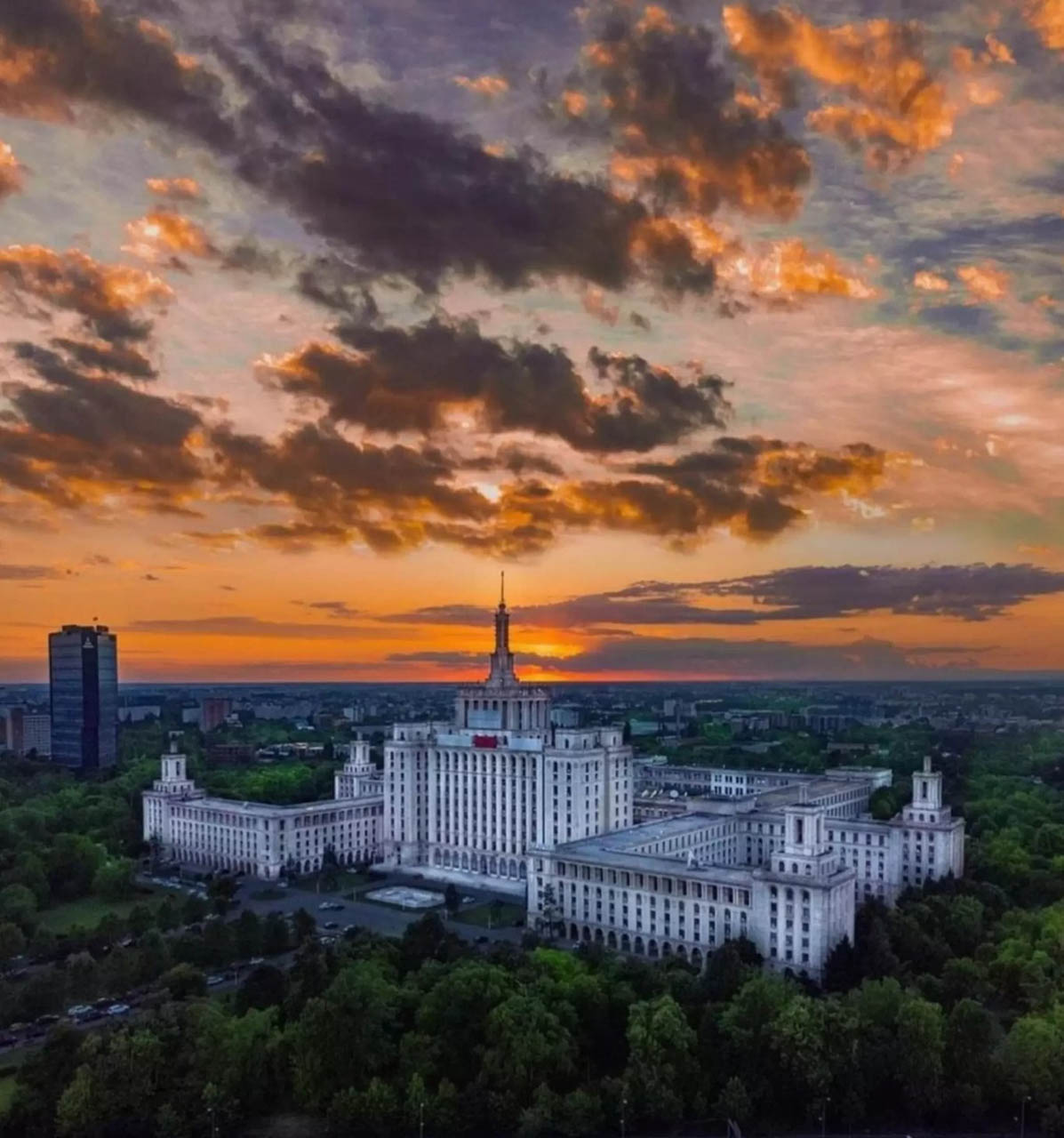
Built at the special request of Nicolae Ceausescu, leader of Romania’s Communist Party, the colossal Parliament Palace – formerly known as “People’s House” ( Casa Poporului ) – is the world’s third-largest administrative building, after Surat Diamond Bourse (India) and U. S. Pentagon.
It took 20,000 workers and 700 architects to build this masive structure that boasts 12 stories above ground, 1,100 rooms, a 350-ft.-long lobby and eight underground levels, including an enormous nuclear bunker.
The Palace of Parliament is the world’s third-largest office building (floor area) and the third largest in volume (after Cape Canaveral Space Centre in the U.S. and the Great Pyramid in Egypt)
The crystal chandelier in the Human Rights Hall (Sala Drepturilor Omului) weighs 2.5 tons.
Some of the chandeliers have as many as 7,000 light bulbs.
When construction started on June 25, 1984, the building was intended it to be the headquarters of the country’s Communist government. Today, it houses Romania’s Parliament, Bucharest International Conference Centre and the Museum of Modern Art.
Built, furnished and decorated exclusively with materials sourced and made in Romania, the building reflects the work of the country’s best artisans. A guided tour takes visitors through a small section of dazzling rooms, huge halls and quarters used by the Senate (when not in session). The interior is a luxurious display of crystal chandeliers, mosaics, oak paneling, marble, gold leaf, stained-glass windows and floors covered in rich carpets. Curtains in some rooms of the Parliament Palace rise to a whopping 54 feet.
Other facts:
20.000 cars can be parked in the underground of the building,
The underground has two anti-atomic shelters with 5 ft. thick walls and radioactive radiation protection,
There are 1,100 rooms, 34 large function/ conference halls (fixed-seats or open-space),
four restaurants, three libraries, two underground parking and one concert hall.
All the materials used to build the palace have been produced or made in Romania, except:
– a small quantity of exotic wood that cannot be found in Romania,
– the doors of Nicolae Balcescu Conference Hall, a gift to Nicolae Ceausescu from Mobutu Sese Seko, at the time President of the Republic of Zaire (today Democratic Republic of Congo),
– ventilation pumps with special filters, imported from Sweden.
Bran Castle
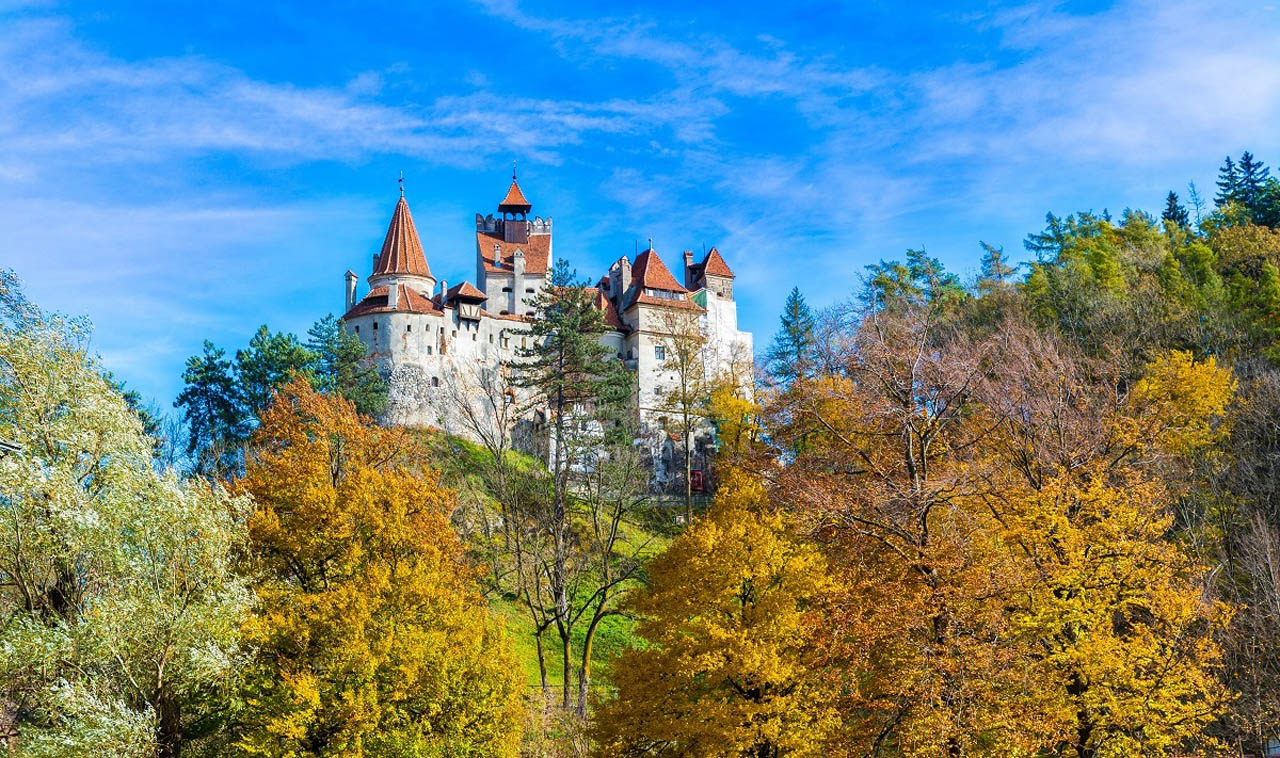
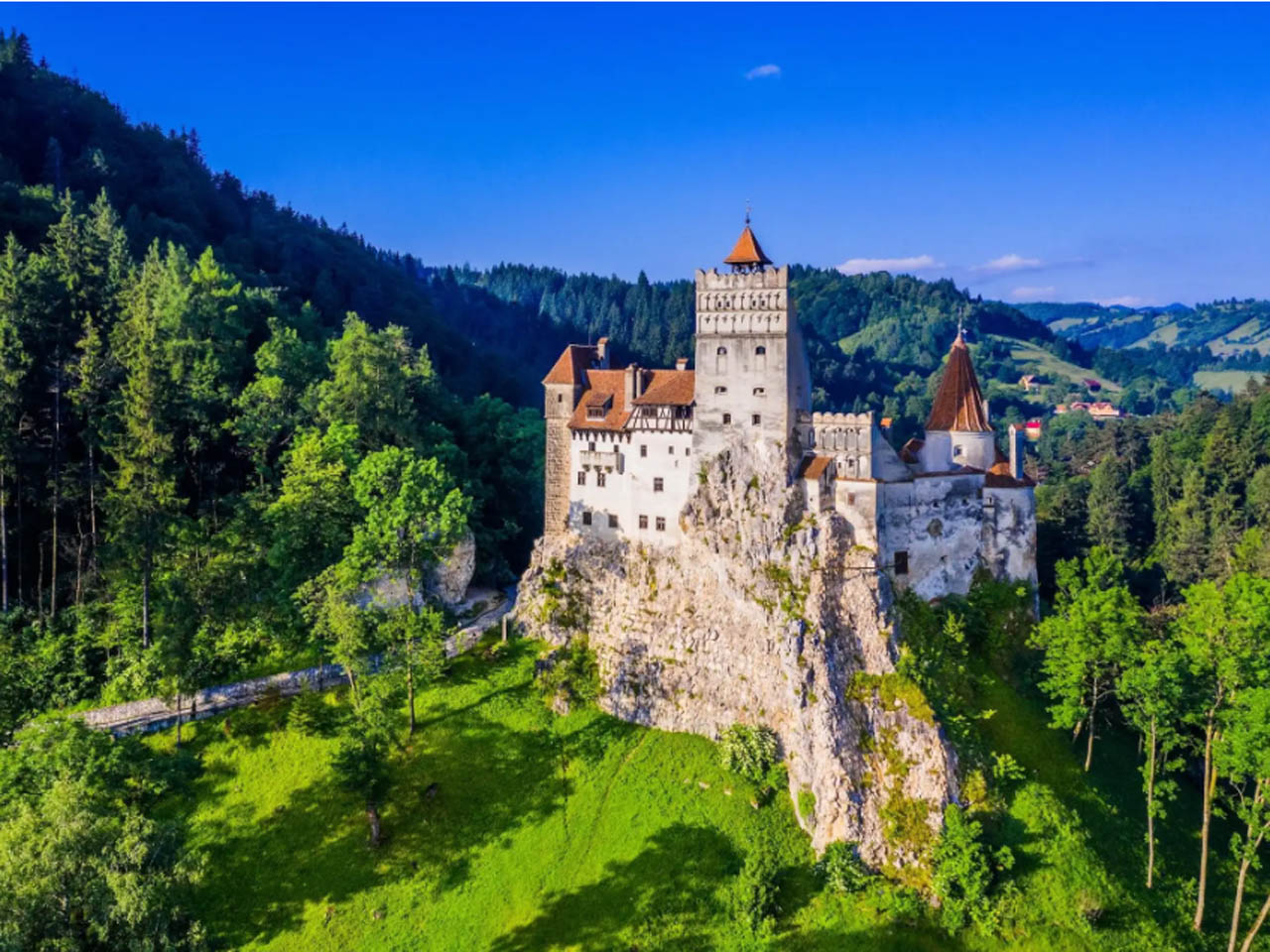
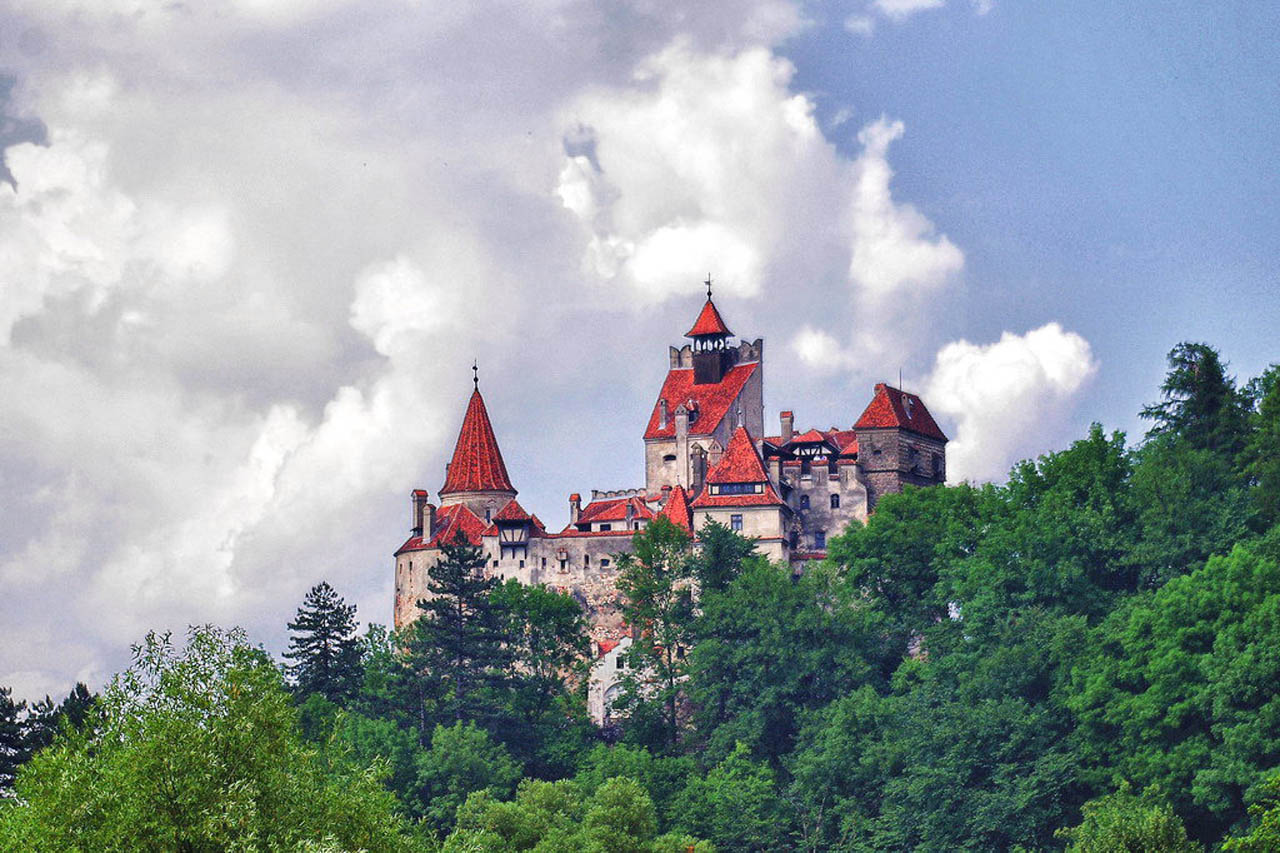
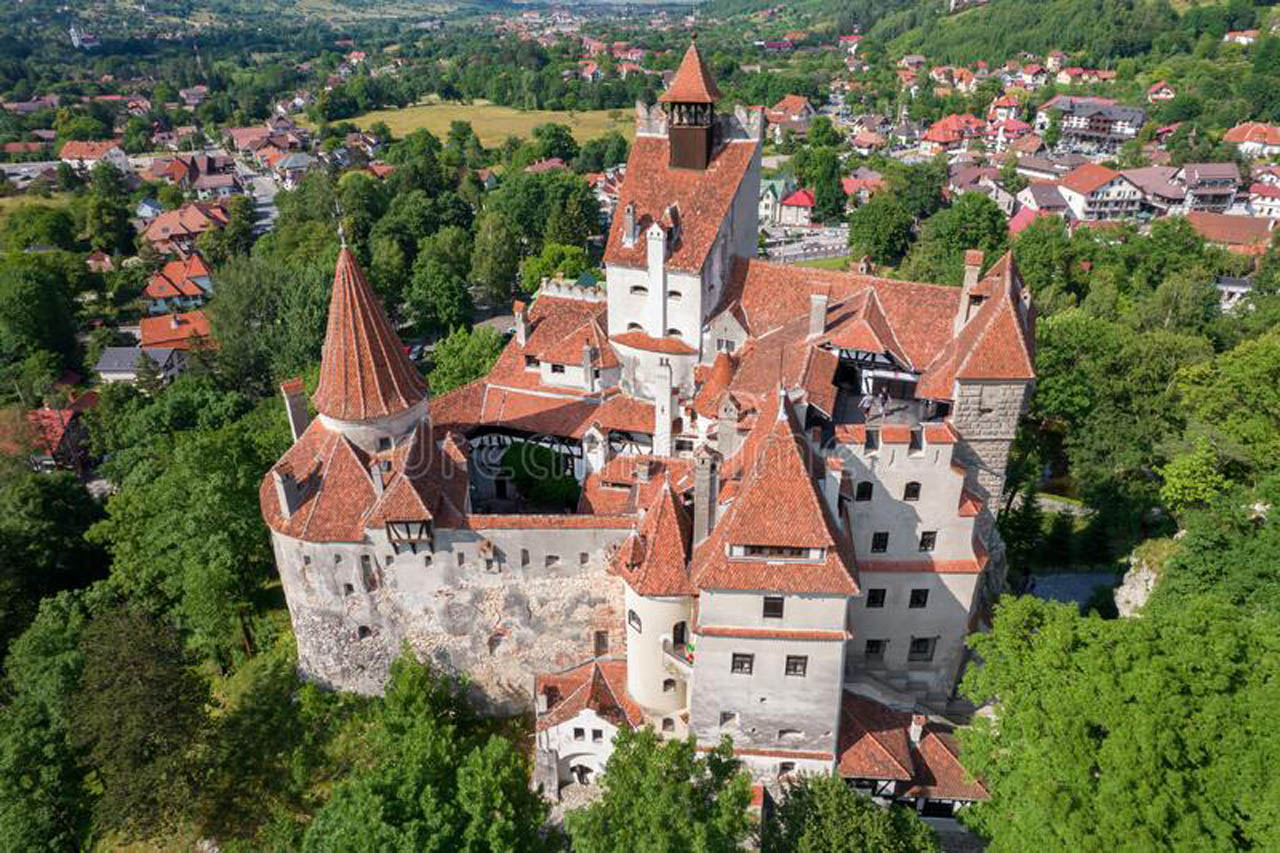
Perched high atop a 200-foot-high cliff, and surrounded by an aura of mystery and legend, Bran Castle owes its fame to its imposing towers and turrets as well as to the myth created around Bram Stocker’s Count Dracula. Built on the site of a Teutonic Knights stronghold dating from 1212, Transylvania’s best-known castle was first documented in an act issued on November 19, 1377, giving the Saxons of Kronstadt (Brasov) the privilege to build a Citadel at the border between Transylvania (central Romania) and Walachia (southern Romania).
Completed in 1388, Bran castle features 57 timbered rooms, some connected by secret passages, narrow winding stairways and a rich collection of furniture, weapons and armor dating from the 14th to the 19th centuries.
Although Bram Stoker – the author of novel Dracula – never visited Transylvania, the Irish writer relied on search and his vivid imagination to create the dark and intimidating land of Count Dracula, and leading to persistent belief that it was once the home of Vlad Draculea II – Tepes (the Impaler), ruler of Walachia. While the association with prince Vlad Draculea is not very strong, Bran castle continues to hold a strong attraction for all the fans of the Count.
Bran castle overlooks the village of Bran and the open-air Ethnographic Museum consisting of old local-style village houses complete with furniture, household objects and costumes.
Tickets
Register for EFC Congress 2026
11th European Federation For Colposcopy Congress
“Cervical cancer prevention and colposcopy”
Get In Touch
Contact us if you require more information or have any question.